

Helping Children with Autism Tolerate Halloween Costumes
The Spark Learning Blog • Posted by Alix Naginski, MSc, RBT on October 7, 2025
Building Comfort Before the Big Night
Getting your child comfortable with their Halloween costume before Trick-or-Treating or attending a Halloween Party is particularly important for children with autism. Familiarity can help reduce nerves and make the experience more enjoyable. Introducing the costume gradually and allowing your child to explore it at their own pace can build confidence and excitement for the big night.
Prepare, Practice, Enjoy!
One effective way to help your child feel at ease with their costume is to gradually introduce it in a low-pressure setting. This can be done by having their costume out and visible as well as having them try it on a couple times leading up to Halloween.
Be prepared for resistance. But, the sooner you have them grow accustomed to their costumes the more likely they will become comfortable with wearing it! This is especially crucial if parts of the costume are new to them, such as glasses or other fun accessories (Kyriacou et al., 2023). Note that some materials may not be easy for your child to wear, such as accessories your child has never been exposed to before (wigs, certain shoes, jewelry, etc.), so spend extra tine on these items!
Fun for the whole family
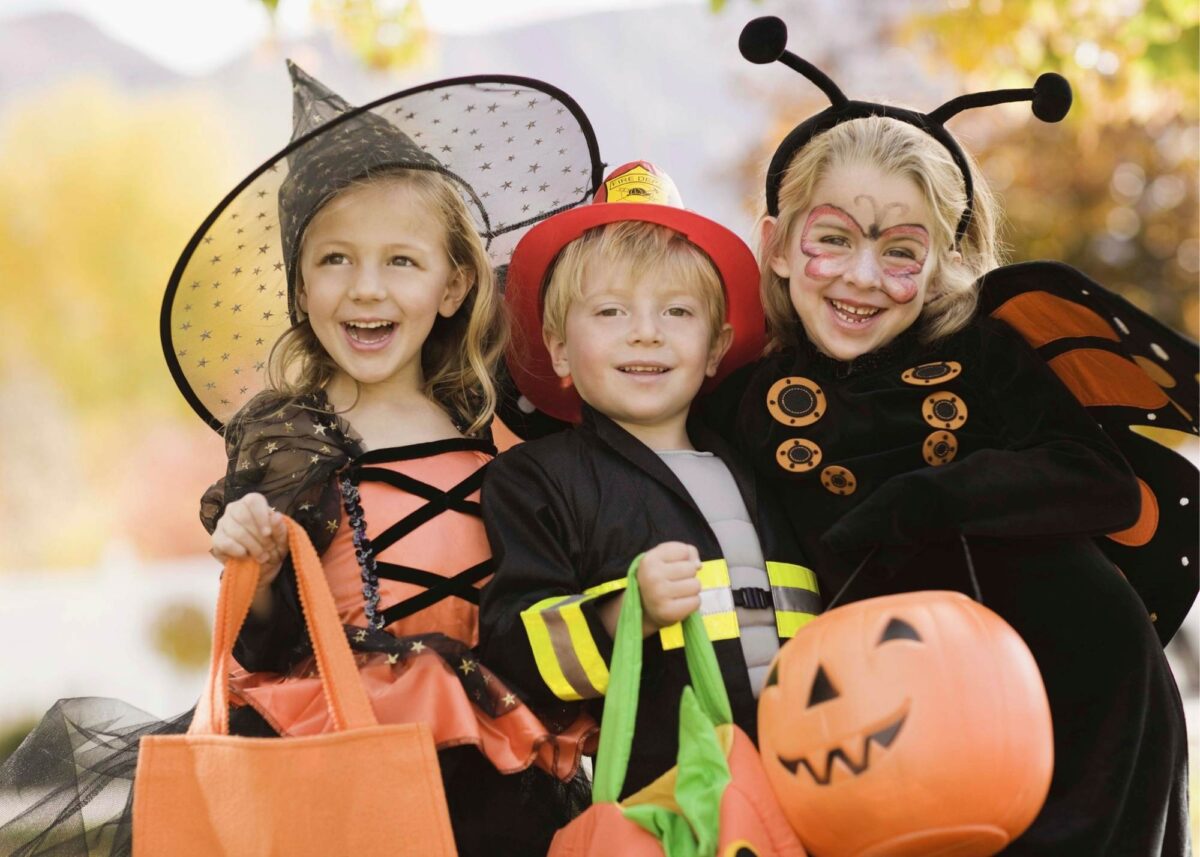
Being in costume all together is a great way to make Halloween a family experience. It can create a sense of excitement and togetherness while modeling how to enjoy the night. Try coordinating costumes to add an extra element of fun and help your child feel included and confident. You can also take photos or have a mini “costume parade” at home to make the experience memorable and positive.
When in doubt, adapt!
When it comes to Trick-or-Treating, consider if your child would be more comfortable sitting rather than walking with you. For younger children, consider using a wagon or stroller to walk around your neighborhood – it could even be part of their costume! This keeps them safe in busier areas and may make the experience more comfortable for them.
Not everyone likes candy, and that’s okay! It doesn’t need to take away from the Trick-or-Treating fun. Consider bringing alternative goodies that you can add to your child’s bag like stickers, small fidgets, or other snacks they prefer. This will increase their enthusiasm and sense of taking part in the experience.
Additional Tips & Tricks (or Treats!)
- Involve your child in choosing their costume by showing them photos or letting them pick from two comfortable options.
- Select tag-free clothing or seamless fabrics if your child has tactile sensitivities.
- Test accessories separately to gradually build tolerance (e.g. try a hat one day and gloves the next).
- When picking out a Halloween costume, consider choosing a two-piece shirt and bottom that has the design printed or sewn on the front or back.
- Keep a backup option (like Halloween pajamas or a simple themed T-shirt) in case the main costume becomes a challenge.
Halloween doesn’t have to be overwhelming – with preparation, practice and flexibility, every child can participate in a way that works best for them.
References
- Chen, T., Yang, W., Wang, Q., Zhang, Y., & Ma, Z. (2020). Effects of social stories intervention for children and adolescents with autism spectrum disorders: A protocol for a systematic review and meta-analysis of randomized controlled trials. Medicine, 99(37), e22018. https://doi.org/10.1097/MD.0000000000022018
- Kyriacou, C., Forrester-Jones, R., & Triantafyllopoulou, P. (2023). Clothes, Sensory Experiences and Autism: Is Wearing the Right Fabric Important?. Journal of autism and developmental disorders, 53(4), 1495–1508. https://doi.org/10.1007/s10803-021-05140-3
Join the Spark Family
- Little Sparks – Our early intervention preschool and kinder program designed to build foundational skills through play-based ABA therapy.
- Speech Therapy – Helping children develop communication skills with personalized, engaging speech and language support.
- Summer Camp – A fun, inclusive program where kids build social skills and confidence through structured activities and play.
- Social Skills & Group – Small-group ABA sessions that teach children how to engage, communicate, and navigate social situations.
- Parent Training – Equipping parents with effective ABA strategies to support each child’s growth at home and beyond.
At Spark, we believe that ABA therapy should be engaging, natural, and, most importantly… fun! Our goal is to empower children, support families, and build confidence in every child we work with.
Ready to learn more? Reach out today!