

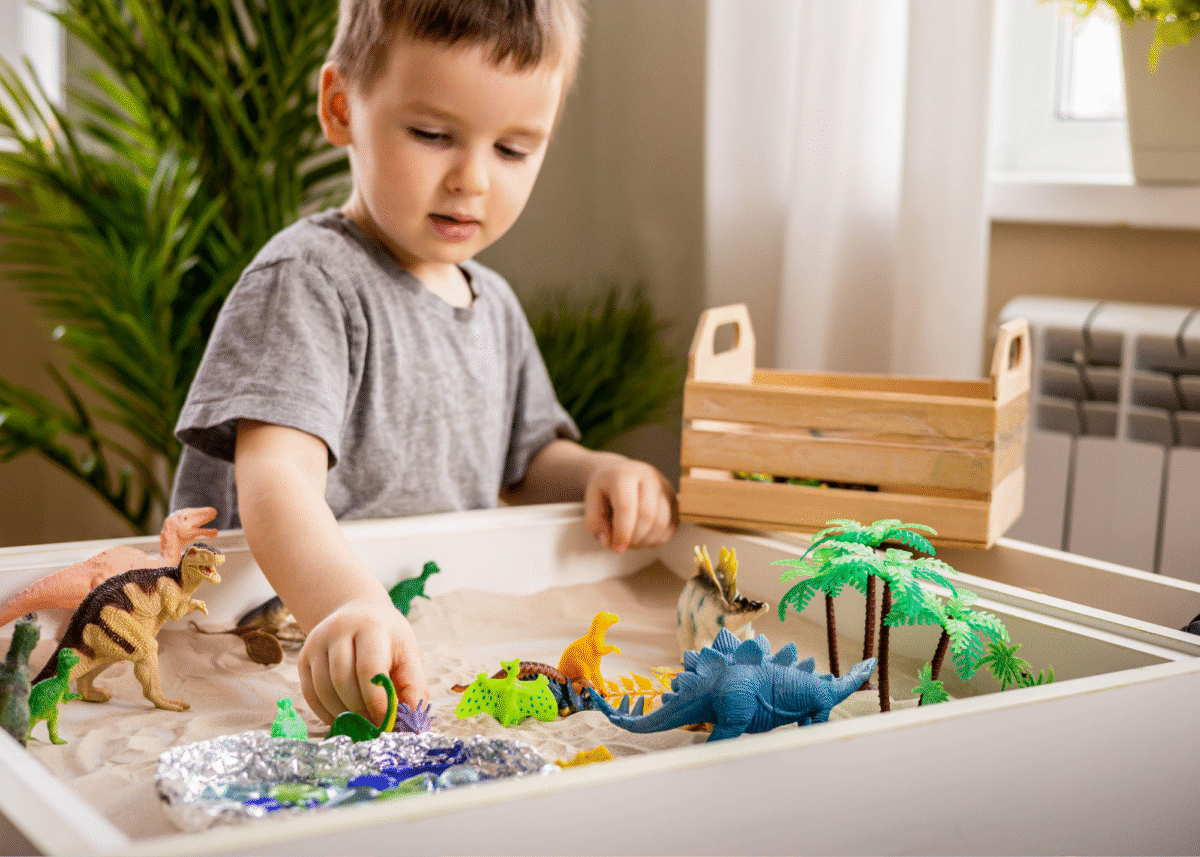
Children are naturally drawn to play, which makes it an especially effective approach within ABA sessions. When learning is embedded into play-based activities, children are more motivated and are more likely to experience skill-building as fun and meaningful rather than challenging or overwhelming. This increased engagement helps children feel calmer and more confident, creating a positive and supportive learning environment. In turn, children are better able to actively participate, sustain attention for longer periods, and successfully retain and apply the skills they learn.
Play-Based ABA Therapy: Why Play Matters in Autism Treatment
The Spark Learning Blog • Posted by Alix Naginski, MSc, RBT on February 6, 2026
The Role of Play in ABA Therapy
Applied Behavior Analysis (ABA) therapy is a widely recognized and effective approach for individuals with autism spectrum disorder (ASD) and other developmental differences. While the term “therapy” might conjure images of structured and rigid sessions, the power of play is often overlooked as a crucial element. In fact, play is a vital tool in Spark’s approach to ABA therapy.
Play is more than just fun and games. It’s a child’s natural way of exploring the world around them to learn and develop essential skills. Read on to learn why play is so important.
Building Motivation and Engagement
Supporting Skill Development
Play offers meaningful opportunities for children to practice and strengthen a wide range of developmental skills in an organic way. Through play, children build social skills such as taking turns, sharing, compromising, coordinating with others, and engaging in reciprocal interactions. It also supports communication skills by encouraging the use of language, participating in conversations, following directions, and expressing wants and needs.
Additionally, play promotes cognitive growth through problem-solving, creativity, and imaginative thinking, while simultaneously supporting fine and gross motor development as children manipulate objects, move their bodies, and explore their environment.
Prioritizing Naturalistic Learning
How Play is Incorporated into ABA Therapy
At Spark, our ABA therapists use a variety of play-based strategies to teach and reinforce skills. Here are some examples:
- Using Preferred Toys and Activities: Therapists identify a child’s favorite toys and activities to then incorporate them into therapy sessions. To increase motivation and makes learning feel seamless.
- Creating Play-Based Scenarios: Therapists create play-based scenarios that target specific skills, such as social interaction or communication. For example, a therapist might use a pretend play scenario to teach a child how to take turns or initiate conversation. During sessions, goals are naturally embedded during play time to make learning less effortful and more enjoyable.
- Following the Child’s Lead: Therapists often follow the child’s lead during play, allowing them to explore and discover at their own pace. This approach promotes autonomy and creativity.
- Reinforcing Positive Behaviors: Therapists use positive reinforcement, such as praise, tokens or access to preferred toys, to encourage desired behaviors during play.
- Structured Play: While much of the play is child led, some structured activities are used in order to teach specific skills. This might include board games or other activities that can expand a child’s play repertoire.
- Inclusion of Peers: Whether your child is in a social group or receiving individual services, there are always opportunities to pair up with peers to prioritize socialization and peer engagement with friends!
- Family Involvement: Families are always welcome to be involved through parent training, joining in on sessions, or including siblings. Our therapists actively coach parents and facilitate sibling participation during sessions, ensuring play-based strategies can be carried over into the home. This collaboration supports consistency, skill generalization, and meaningful learning beyond the therapy setting.
Ultimately, the goal is to make learning fun and engaging. By incorporating play into ABA therapy, therapists can create a positive and supportive environment that fosters skill development and promotes overall well-being. If you’re considering ABA therapy for your child, remember that play is a crucial component. It’s not just about learning; it’s about creating joyful and meaningful experiences.
Join the Spark Family
- Little Sparks – Our early intervention preschool and kinder program designed to build foundational skills through play-based ABA therapy.
- Speech Therapy – Helping children develop communication skills with personalized, engaging speech and language support.
- Summer Camp – A fun, inclusive program where kids build social skills and confidence through structured activities and play.
- Social Skills & Group – Small-group ABA sessions that teach children how to engage, communicate, and navigate social situations.
- Parent Training – Equipping parents with effective ABA strategies to support each child’s growth at home and beyond.
At Spark, we believe that ABA therapy should be engaging, natural, and, most importantly… fun! Our goal is to empower children, support families, and build confidence in every child we work with.
Ready to learn more? Reach out today!